How to Start Hiking with Kids
Hiking with kids can be one of the best ways to build core memories as a family. It was for me as a kid, and it has become some of my favourite moments with my own children now.
It doesn’t always start that way though. The first few times can feel chaotic and uncertain. But there are things you can do to set yourself up so that first hike feels less like a survival test and more like the beginning of something that becomes a real part of your family life.
This post is for parents who are new to hiking with little ones — especially toddlers. Not seasoned outdoor enthusiasts with a garage full of gear. Just parents who want to get outside with their kids and actually enjoy it.
Before anything else — your only goal for the first few hikes is to make it enjoyable and make it feel safe. Not a workout. Not a destination. Just a good experience they want to repeat. Keep that in mind and the rest gets a lot easier.
What to Look For in a Trail
If you have never hiked with a toddler before, opening AllTrails for the first time can feel overwhelming. Hundreds of trails, ratings, numbers, elevation charts. Here is the good news — you can ignore most of it for now.
Start simple. AllTrails has filters that do most of the work for you: kid friendly, stroller friendly, and easy. Use whichever fits your situation and let that narrow your options before you look at anything else.
Then look at these three things:
Surface
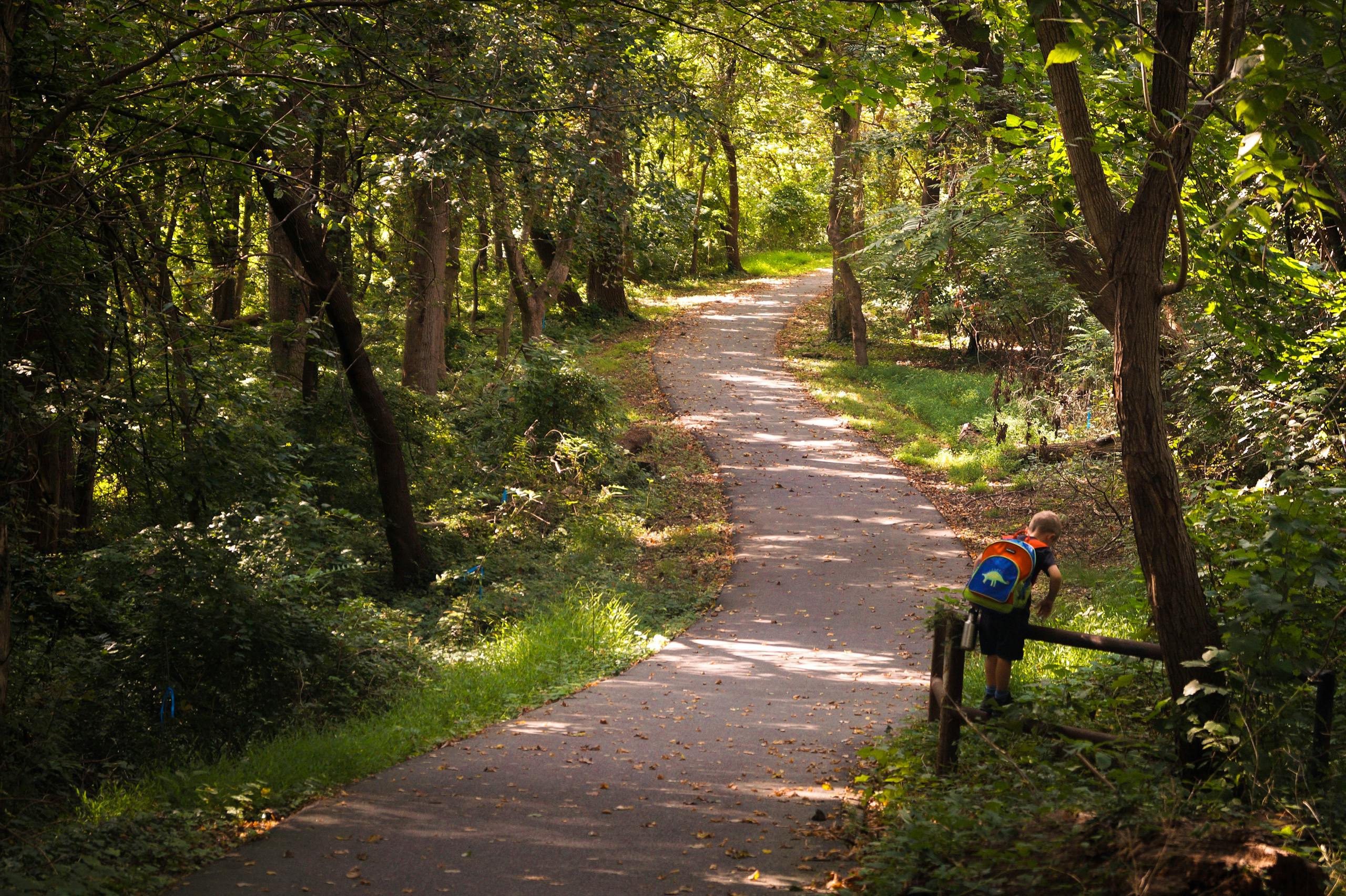
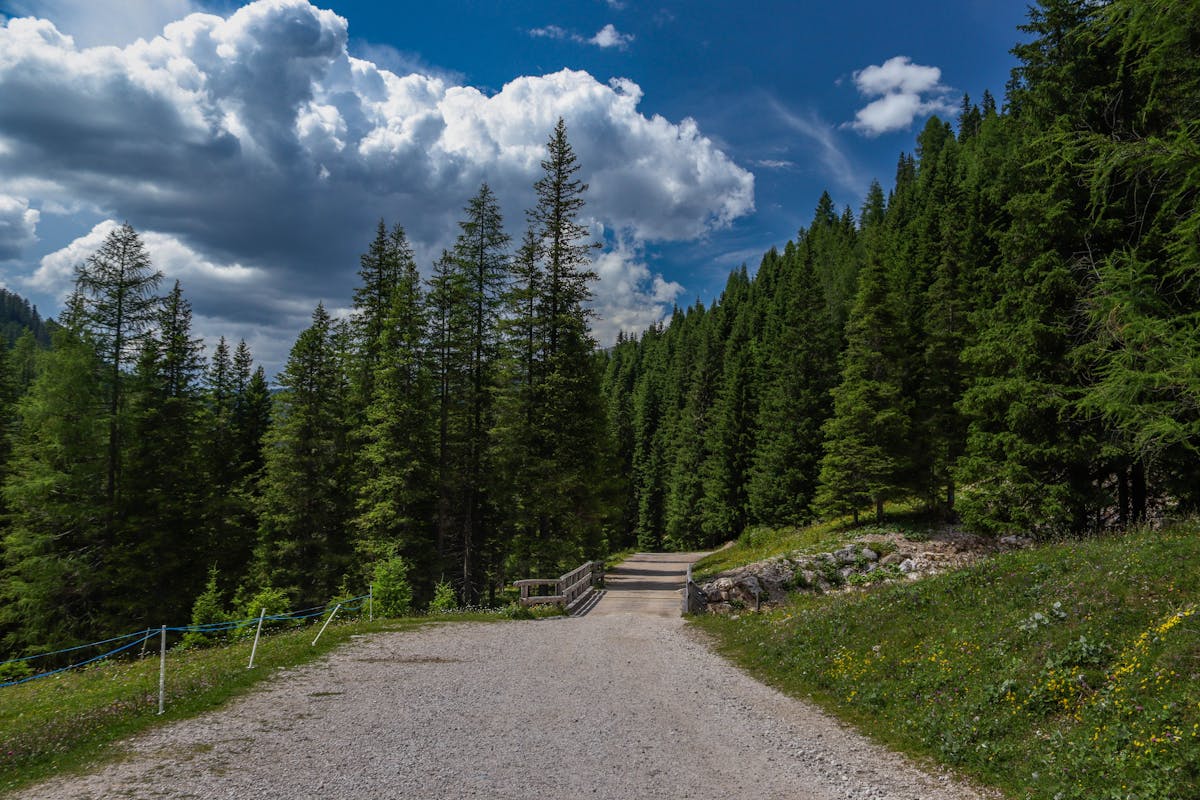
For your first hikes you want paved, gravel, or hard packed trails. Not rooty, not rocky, not uneven. Those come later when everyone has their trail legs. If you are bringing a stroller this is non negotiable.
Distance
Stay under a mile to start. It sounds short and it is — intentionally. Even a gentle incline feels significant on little legs. You are not testing limits here, you are building a positive experience. Short and sweet beats long and miserable every time.
Features
This is the secret weapon of a great toddler hike. Look for trails that have something to discover along the way — a stream, a bridge, interesting rocks, a muddy patch, a fallen log. These are not just nice to have. They are what makes a toddler actually want to keep walking.
Throwing rocks from the bank to make the biggest splash. Racing sticks off one side of a bridge and running to see whose wins on the other side. Peering into the water looking for fish. Stomping through a muddy patch. These are the moments they talk about for weeks.
Just a note on streams — the magic is at the edge, not in the water. Until you know a stream well, keep little ones on the bank. Currents and slippery rocks are not always obvious to a first timer.
Where to Find Trails
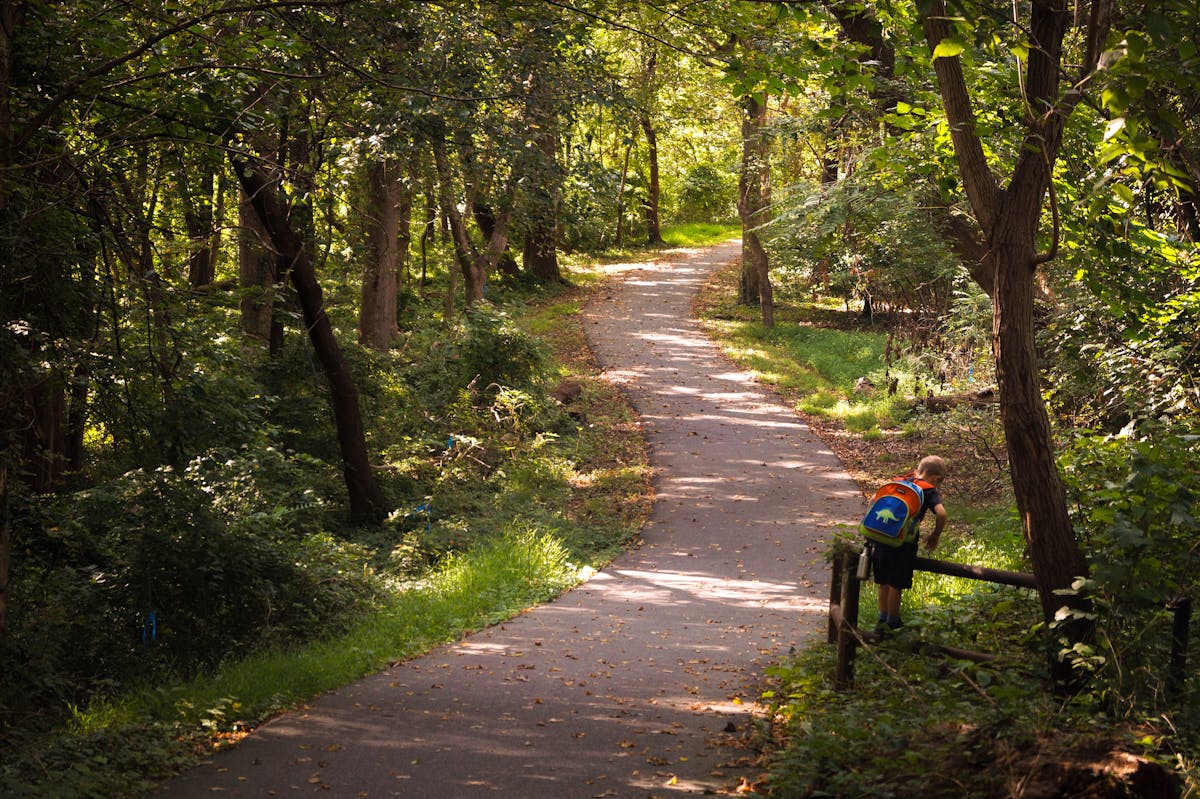
Once you know what you are looking for, finding options is easier than you think.
AllTrails is your best starting point. It has the largest trail database in North America, the filters we just talked about, and a review community that is genuinely useful. Look at the most recent reviews, not just the trail description. Someone may have hiked that trail three days ago and noted it is still muddy after last week’s rain, that the bugs are brutal, or that the stream is running high.
State, provincial, and national park websites are also worth bookmarking. Parks Canada and the National Park Service both have detailed trail information specific to their parks. If you are near a state or provincial park their websites often have trail maps and condition updates too.
Local Facebook groups and mom groups are the most underrated resource. Someone in your area has taken their toddler on that exact trail recently and will tell you exactly what to expect.
Timing Is Everything
This one is simple but it makes a bigger difference than you’d think. Go in the morning. Toddlers are at their best early in the day before the wheels start coming off. You want that energy working for you on the trail, not against you.
Go after a meal. A fed toddler is a cooperative toddler. Removing hunger from the equation before you even hit the trail is one of the easiest things you can do to set yourself up for a good outing.
And keep it short. Under an hour to start. You are not trying to see how far they can go. You are trying to leave while everyone is still happy.
The Most Important Thing: End Early
The goal is to turn around before anyone asks you to. Watch for the first signs of tiredness — slowing down, quieting down, asking to be carried. That is your cue. Not a meltdown, not tears. Before that.
Will they still complain sometimes? Yes. Mine still do years later. You know your child. There is a difference between a kid who is being a kid and a kid who has genuinely had enough. Trust that instinct.
Your turn will come. The longer hikes, the more challenging trails, the moments that are as much for you as for them. But that is built on a foundation of early wins. Protect those first experiences.
What Hiking wiith Kids Actually Looks Like
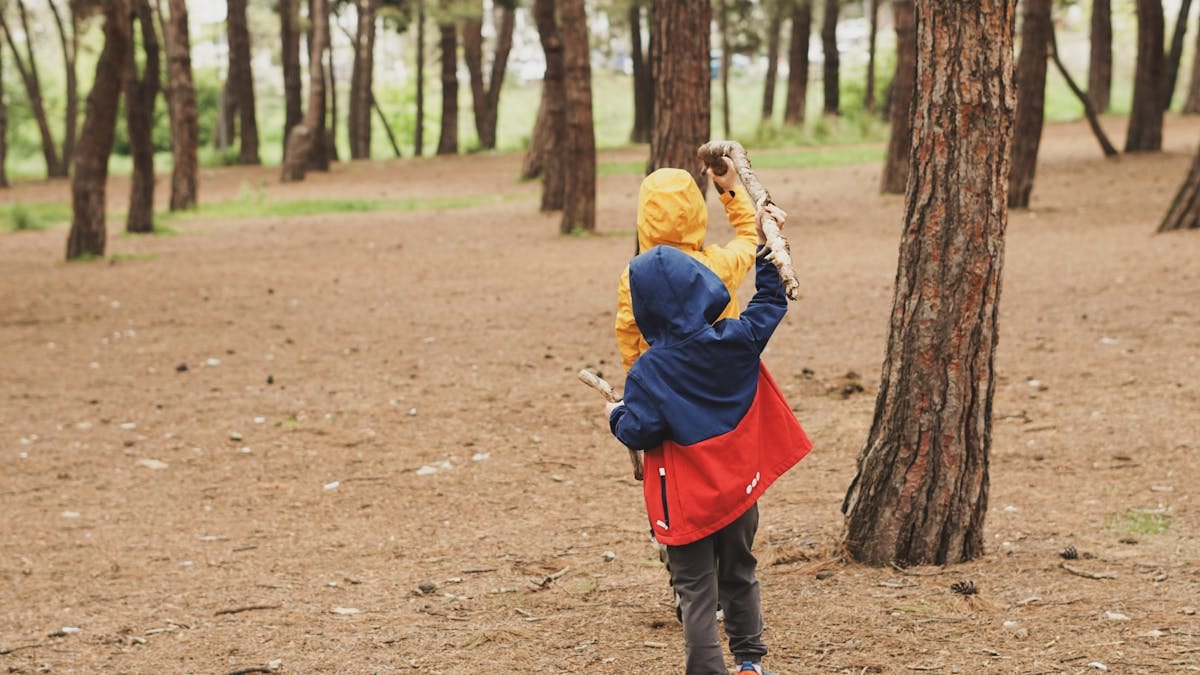
Being on a trail with a toddler or a young child is like trying to follow a squirrel — they go left, right, backwards, up, and somehow never straight ahead.
That is not a problem. That is the hike.
What most parents don’t realize is how much ground a toddler actually covers in all that wandering. If your child has a step tracker you will notice they often clock two or three times your steps. It is not just stride length. They are genuinely working hard — circling back, climbing on things, crouching down, darting sideways.
So when they start to fade it can happen faster than you expect. Which is exactly why you turn around before they ask you to.
What to Wear Hiking with Kids
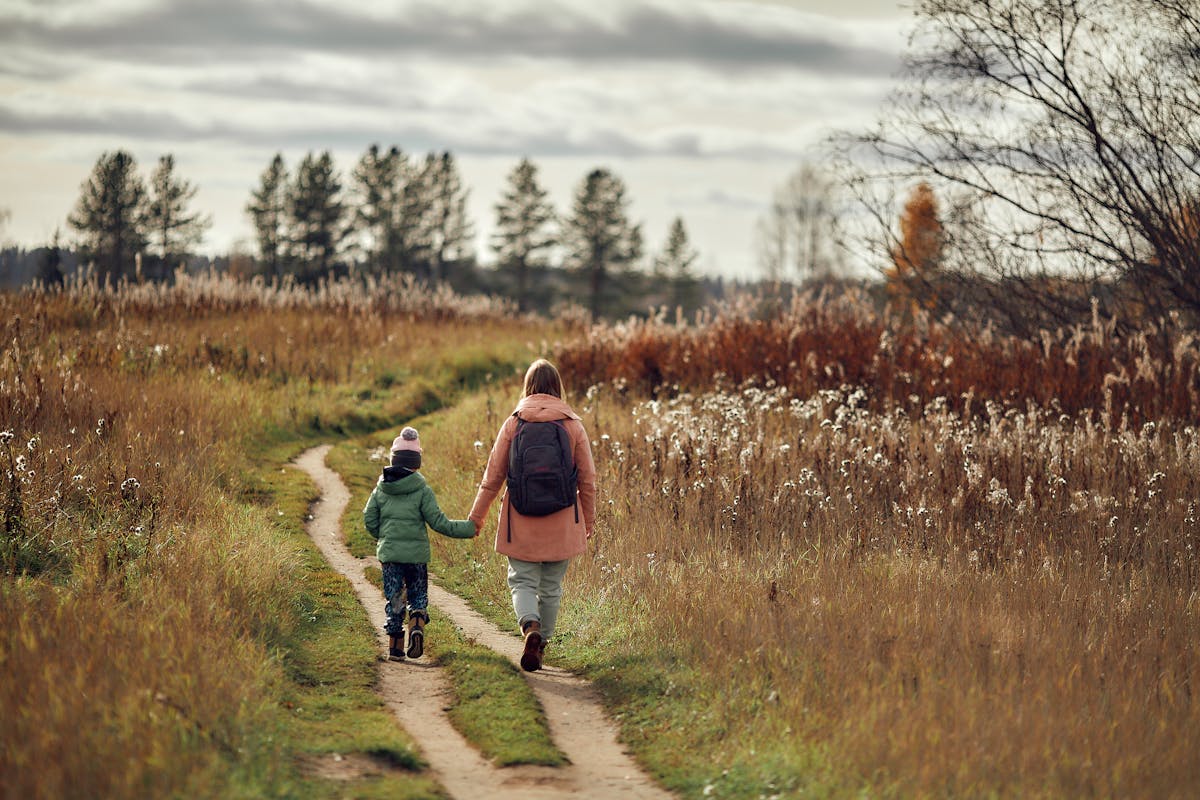
You don’t need special hiking clothes. Dress your toddler for the weather like you would for any other outdoor activity.
Warmer months
- Lightweight pants ( We find pants work better on trails because of plants, branches, rocks, and all the other stuff along the way. We are usually in pants unless it’s super hot out.)
- Closed toe shoes with good tread — running shoes work great, not lifestyle sneakers
- A light layer in the bag — a lightweight hoodie or thin jacket for when you’re under the forest canopy
- Hat and sunglasses
- Apply sunscreen before you leave
Cooler months
- Pants
- Closed toe shoes with good tread
- Warm layers — a fleece, jacket, or hoodie
- Hat, gloves, warm socks
- Apply sunscreen before you leave (yes, even in winter)
What to Bring Hiking with Kids
You need less than you think. And if you are still in the toddler stage chances are you already leave the house with an arsenal of must have items. A lot of that transfers directly to the trail.
A comfortable backpack
If you are hiking without a stroller you need something to carry your things in. It does not need to be a hiking specific pack — just something that sits comfortably on your back. You will notice a badly fitting bag after about twenty minutes on uneven ground.
A note on kids carrying their own pack. Some parents love the idea and it can be a fun novelty — letting them bring bunny or bear on their first hike. Just don’t count on it for actual gear. That backpack will be yours within fifteen minutes. Pack it accordingly.
A note on carriers and strollers
If you are already using a carrier, it can extend your range on foot when little legs get tired. A stroller works well on paved and gravel trails. For a short beginner hike with a toddler who is walking, neither is required.
Water
A full bottle for each person. Lightweight individual bottles — skip the heavy steel ones when you are carrying everything on your back. Leave an extra bottle in the car for when you get back. Everyone is thirsty at the trailhead.
Snacks
Pack more than you think you need and treat them as a tool not an afterthought. A well timed snack break can completely reset a flagging toddler. Save something special for the turnaround point.
First Aid Kit
Nothing elaborate — band aids, an antiseptic wipe, whatever children’s medication you normally carry. And a lollipop. You cannot scream your head off while you are sucking on a lollipop. This is tried and tested trail wisdom.
Before You Hit the Trail
You do not need a big safety lecture. You need three rules your toddler can actually remember.
- Stay where I can see you.
- Stay on the trail.
- Ask before you touch.
Go over them in the car on the way there. Keep it light, keep it simple. You are not trying to scare them, you are just setting the ground rules before the excitement takes over.
One thing worth doing before your first hike — a quick Google of the area you are hiking in. Depending on where you live, there may be plants or wildlife worth knowing about. Nothing alarming, just a two minute check so you know what you are looking at. A parent hiking near the Florida Everglades is navigating a very different landscape than a parent hitting the trails around Banff.
Beyond that, if you have picked the right trail most safety takes care of itself.
Make It Magical
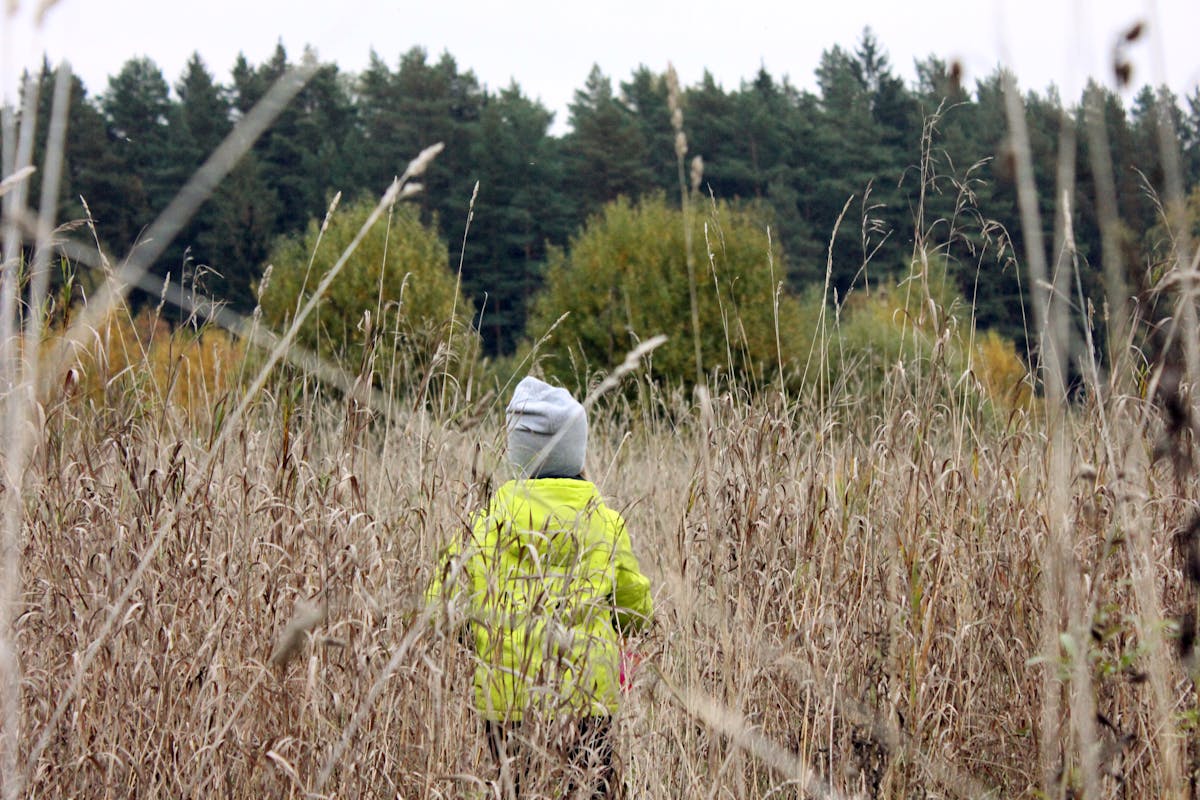
One of the best things about hiking with little ones is that they force you to slow down. And when you slow down you start to notice things. A spider web catching the light. A beetle making its way across a log. The way moss feels under small fingers.
Toddlers are extraordinary at this. They will find wonder in things you have walked past without a second glance your entire adult life. And if you let them lead that curiosity instead of rushing past it, they will start showing you a world you forgot was there.
A few simple things can help:
A magnifying glass. Cheap, lightweight, and absolutely transformative on a trail. Suddenly every rock, bug, and leaf becomes a whole investigation.
A small flashlight. For peering into hollow logs, dark spaces under rocks, and shadowy spots along the trail. Kids go absolutely wild for this.
Binoculars. For spotting birds, watching wildlife from a distance, or just feeling like a very important explorer. Toddlers do not need to know how to focus them to feel the magic.
A verbal scavenger hunt. No printing, no prep. Just call it out as you walk — can you find something red, something bumpy, something that makes a sound? And then hand it over to them. Let them boss you around for a while. A toddler who gets to point at a mossy rock and tell you to go find it is a toddler who is very happily still on the trail.
Bring Your Village
Hiking with a toddler alone every weekend is hard. Hiking with another family is a completely different experience.
When kids have a trail buddy they entertain each other. They are motivated to keep up, they find things to show each other, and the dynamic shifts from parent managing child to kids just being kids outside together. And while that is happening you might actually get to finish a sentence with another adult.
An active grandparent is another secret weapon. They tend to have exactly the right pace for a toddler hike — unhurried, curious, happy to stop for the tenth rock in a row. And watching a grandparent experience the trail through a toddler’s eyes is its own kind of magic.
Hiking is easier to sustain when it becomes a social thing. A standing Sunday morning trail walk with another family stops being something you have to motivate yourself to do and starts being something everyone looks forward to.
The Familiar Trail
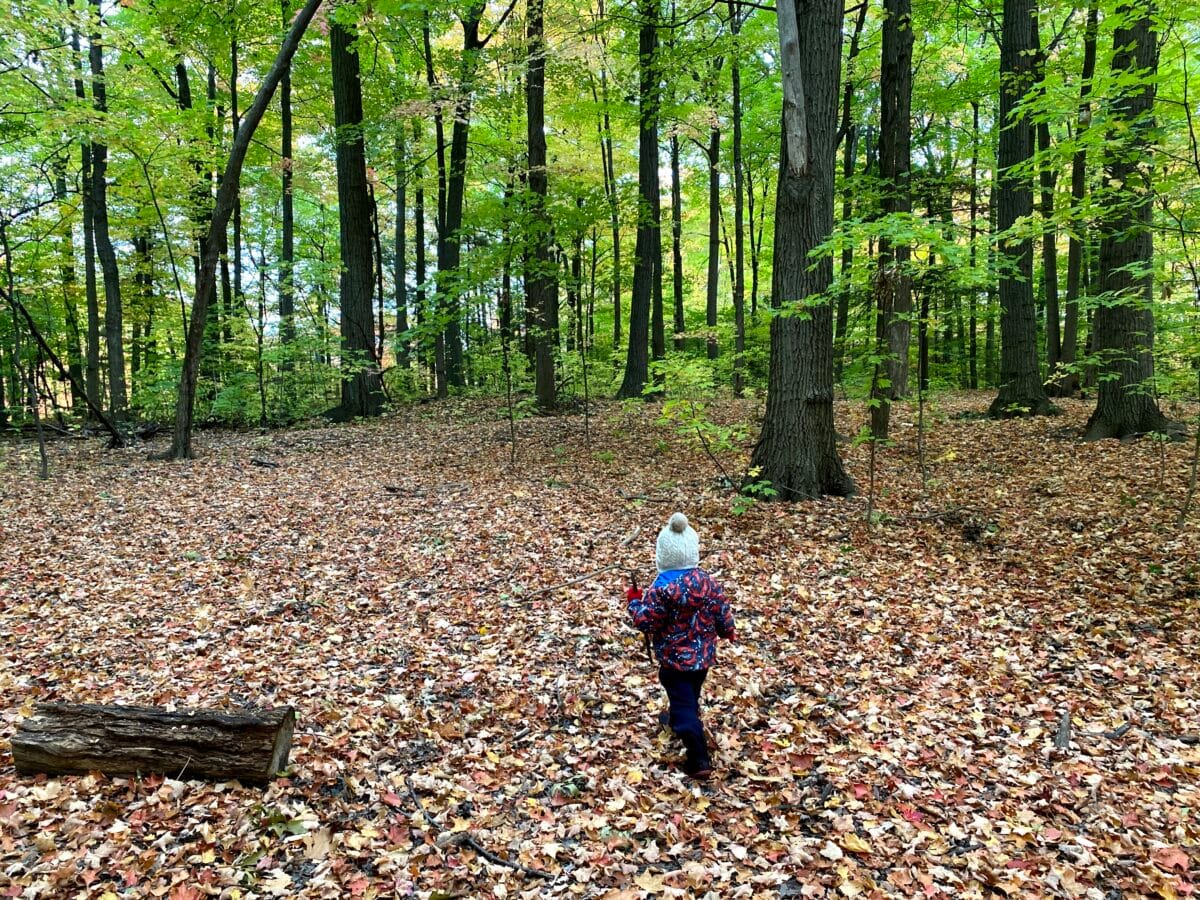
Once you have done a few hikes and found one your family enjoys, do not be afraid to go back. Again and again.
Hiking happens most when it is easiest. As much as I would love to chase viewpoints in the Rockies every weekend, the reality is that we return most often to the trails that are ten minutes from home. And there is nothing wrong with that. That is actually how hiking becomes a real part of your family life rather than a special occasion.
There is something else that happens when you know a trail well. You stop navigating and start being present. You know where the rooty section is, where the trail drops off, where they can run ahead safely. That knowledge frees you up in a way that a new trail never can — especially when you are also managing a toddler.
And then there is the magic of watching a familiar place change. The stream running high in spring. The same trail buried under fall leaves a few months later. The first snow on the branches you walked under in summer. Your kids will start to notice these things before you do. That is the beginning of a real relationship with nature — not a checklist of places visited, but a deep knowing of one place across time.
After your first few Hikes
Once you have gone on a few hikes and gotten your bearings you can start to make it more meaningful for yourself. Before you pick a trail, ask yourself one simple question: Why are you going today?
Because the answer changes everything.
To burn off toddler energy → find a trail with things to discover, let them lead, don’t rush
To get your own exercise → paved or gravel, stroller friendly, flat and moving
A social outing → somewhere easy to access with space for two families to spread out
To catch a season → spring wildflowers, fall colour, the stream running high after rain
All valid. All pointing toward a different kind of trail. Know what you need today and let that shape your choice.
Just Go
Your first hike with your toddler does not need to be beautiful or ambitious or Instagram worthy. It just needs to happen.
Start small. Go slow. End before anyone asks you to. And then go back and do it again.
That is it. That is the whole thing. Everything else — the longer hikes, the bigger adventures, the moments that take your breath away — comes from that first simple outing where everyone came home happy and wanted to do it again.