Where to Stay in the Smoky Mountains with Kids: Gatlinburg vs. Pigeon Forge
Families deciding where to stay in the Smoky Mountains with kids are usually trying to balance two things: time in the park and logistical ease. Some families want to be as close to the park as possible. Others need easy access to groceries, resorts, and attractions. A few want to skip the tourist strip entirely and trade convenience for quiet.
Getting Oriented & The Spur
This post contains affiliate links; I may earn a commission at no extra cost to you. Full Disclosure
What’s less obvious at first is that you’re visiting a large, spread-out national park, and where you stay shapes how you experience it.
You’re not staying in one central place and walking everywhere. You’re driving in and out of the park, deciding how much to do each day, and figuring out how to keep things manageable for your family. Gatlinburg sits right at the park entrance. Pigeon Forge is about 15–25 minutes farther out. Most days are slower—time in the park, a few simple stops, and then back to where you’re staying.
The Spur:
The primary road connecting Pigeon Forge and Gatlinburg is known as The Spur. While it’s only a 5-mile stretch, it is the ultimate bottleneck for the entire region.
- The Bottleneck: During peak season, this short drive can turn into a 45-minute crawl.
- The Layout: It is a dual-lane road with the river running between the north and south lanes. There are no “shortcuts” once you are on it.
- The Impact: If you stay in Pigeon Forge but plan to be in the park every morning, you will become very familiar with this road.
How to Structure your Days
Most days are built around time in Great Smoky Mountains National Park—whether that’s a short trail, a scenic drive, or a few stops along the way. Even though the park is open at all hours, most of what you’ll want to see and do happens during the day.
The Typical Daily Flow:
- Morning (The Nature Shift): Most families head into the park early for a short trail, a scenic drive, or a river stop. This is when you want to be closest to the entrance to beat the 10:00 AM crowds.
- Mid-Day (The Transition): Slower time spent at a picnic area, a few simple stops along the road, or heading back to the base to recharge.
- Evening (The Town Shift): Most families shift back toward where they are staying or head into town for dinner, ice cream, or simple entertainment before the next day.
The Reality of the Commute:
Because most families follow this same “park all day, town at night” schedule, traffic on The Spur and the main Gatlinburg entrance is heaviest between 10:00 AM and 2:00 PM. Your choice of base—and which entrance you use—will dictate whether you spend those prime hours on a trail or staring at a bumper in front of you.
Gatlinburg (The Walkable Mountain Village)

Gatlinburg sits right at the park entrance, which makes it easier to get into the park without adding extra driving each day.
Gatlinburg has what you need—groceries, pharmacies, and plenty of restaurants—but it’s more compact, and simple errands can take a bit more effort, especially during busy times.
Logistics
- Groceries & Supplies: Food City (Hwy 321) is the main grocery store. It has a pharmacy and free parking, but it’s smaller than the big-box stores in Pigeon Forge. Smaller markets along the Parkway are convenient for quick hauls but expect higher prices.
- Parking: Most downtown hotels and condos have their own parking. If you’re staying in a cabin outside the main strip, expect to pay $10–$20/day for public lots. To save, use the free Trolley from the Park-and-Ride lots at City Hall. Note: Strollers usually need to be folded before boarding.
- Traffic: The park entrance gets backed up between 10 AM and 2 PM during peak season. If you’re planning to start a hike, aim to leave your lodging by 8:30 AM.
- Evening Activities: Most families stroll the main strip, stop for ice cream or fudge, and browse shops. It’s walkable but busy, especially on weekends.
Drive Times from Downtown Gatlinburg
- Sugarlands Visitor Center: 5 min
- Laurel Falls Trailhead: 15–20 min
- Grotto Falls / Roaring Fork: 10–15 min
- Greenbrier / Porter’s Creek: 15–20 min
- Kuwohi (Clingmans Dome): 45–60 min
- Cades Cove: 1 hr 15 min+
Where to Stay in Gatlinburg
Downtown / Parkway
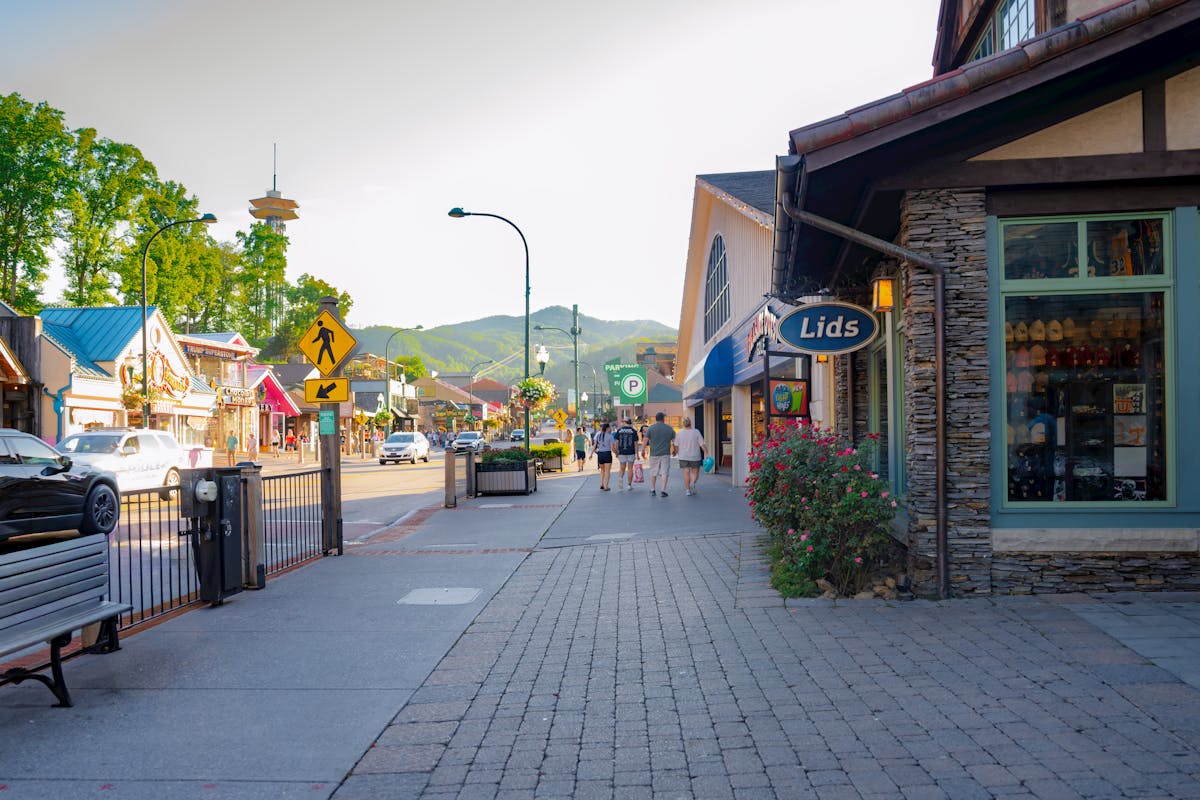
Walkable to restaurants, shops, and evening entertainment. Busy and more expensive, but best if you want to park once and stay on foot.
Best for: Families with toddlers in strollers or groups with grandparents who want to be part of the action without the long walks. Focus your search within three blocks of the Parkway, specifically between Reagan Drive and Cherry Street. This is the flattest core of the town. It turns your trip into a “Park Once” experience where everyone can get to the Aquarium or the Trolley without fighting steep mountain inclines.
East Gatlinburg (Arts & Crafts area)
Quieter, more space, and often better value. Adds 10–20 minutes of driving to the strip. Good if you want breathing room and don’t need to walk to dinner.
Best for: Larger groups who want a quiet cabin feel but wants to skip the downtown traffic to get into the park. Use the Hwy 321 back entrance. You bypass the downtown bottleneck entirely and can reach the Greenbrier section of the park in 15 minutes.
Ski Mountain / Ober area
Great views but steep, winding roads. Not ideal with young kids or for night driving. More isolated from town.
Best for: Families with older kids (8+) and a confident driver who wants that classic “balcony over the clouds” experience. To minimize the winding mountain drive for kids prone to car sickness, stay below the 2,500ft elevation line.
If you’re passing through Pigeon Forge on the way in, you can still include one activity there—something like Dollywood or The Island—and then keep the rest of your trip focused on the park.
Pigeon Forge (The High-Energy Entertainment Strip)

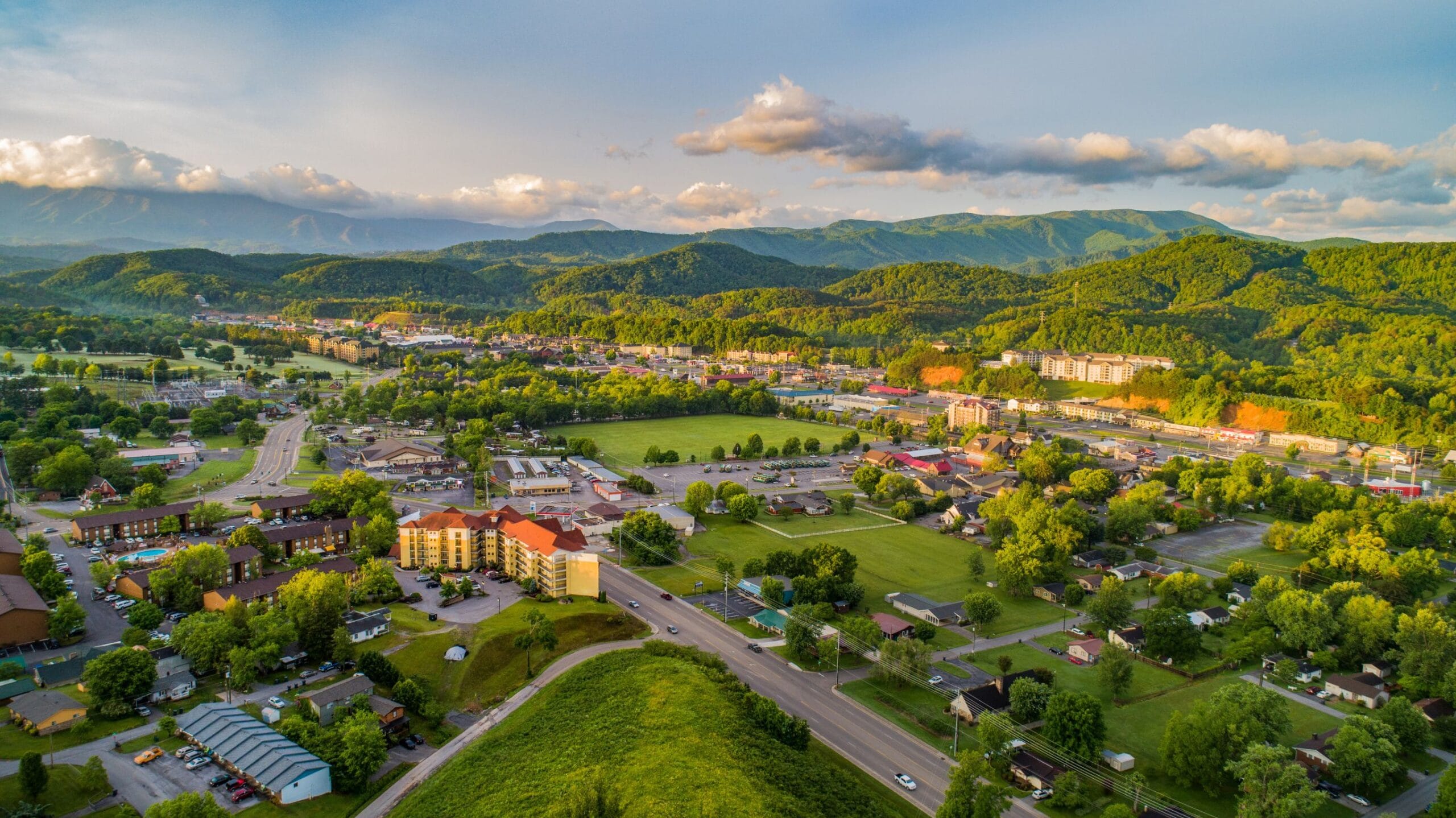
Pigeon Forge sits just outside Gatlinburg and is centered around attractions, entertainment, and convenience for families. Many families choose to stay here because it puts everything in one place—restaurants, activities, and larger accommodations—while still being within driving distance of the park.
Logistics
- Groceries & Supplies: Easy access to Kroger, Publix, and Walmart Supercenter (in nearby Sevierville). These stores have large, free parking lots that are easy to navigate with a big vehicle. Pharmacies and baby supplies are available along the Parkway.
- Parking & Getting Around: Large, free parking lots are standard at most hotels, cabins, and attractions. The Island has a massive free lot with a tram to the main entrance—helpful with tired toddlers.
- Traffic: The Spur (the road connecting Pigeon Forge and Gatlinburg) is the main bottleneck. During peak season (10 AM–2 PM), this 5-mile stretch can turn into a 45-minute crawl. Plan your park days for early mornings to avoid this.
- Evening Activities: Dinner shows, mini golf, dancing fountains at The Island. More lively and entertainment-focused than Gatlinburg.
Drive Times from Pigeon Forge
- Dollywood: 5–10 min
- Gatlinburg Strip: 15–25 min (traffic dependent)
- Sugarlands Visitor Center: 20–30 min
- Laurel Falls Trailhead: 30–40 min
- Cades Cove: 1 hr 10 min+
- Kuwohi (Clingmans Dome): 1 hr 20 min
Where to Stay in Pigeon Forge
Parkway (main strip)
Close to attractions, restaurants, and shows. Busy with constant traffic. Best if you want to be within 5–10 minutes of Dollywood, The Island, and dinner shows.
Best for: Families that want the “Disney vibe”—where older kids can walk to The Island and mini-golf without getting in the car.
North Pigeon Forge / Sevierville Border
Closer to the park entrance and the big grocery stores (Kroger, Publix, Walmart Supercenter). Better for budget-conscious families or longer stays where easy grocery access matters.
Best for: Multigen groups on a longer stay (5+ days) and need easy, “Big Box” grocery runs and the fastest route to Dollywood. Look for rentals near Veterans Boulevard. This efficient corridor allows you to zip between the big-box stores (Walmart/Publix) and the theme park gates in minutes, completely bypassing the bumper-to-bumper Parkway crawl.
Upper Middle Creek (Wears Valley side)
Cabins with mountain views, 10–15 minutes from the Parkway. More space and quiet than the main strip, but you’ll need to drive for groceries and entertainment.
Best for: Families that want a mountain-view cabin but don’t want to be 40 minutes from a grocery store. This area puts you at the “back gate” of Dollywood, allowing you to reach the park in 10 minutes using local roads.
Wears Valley (The Quiet Side)
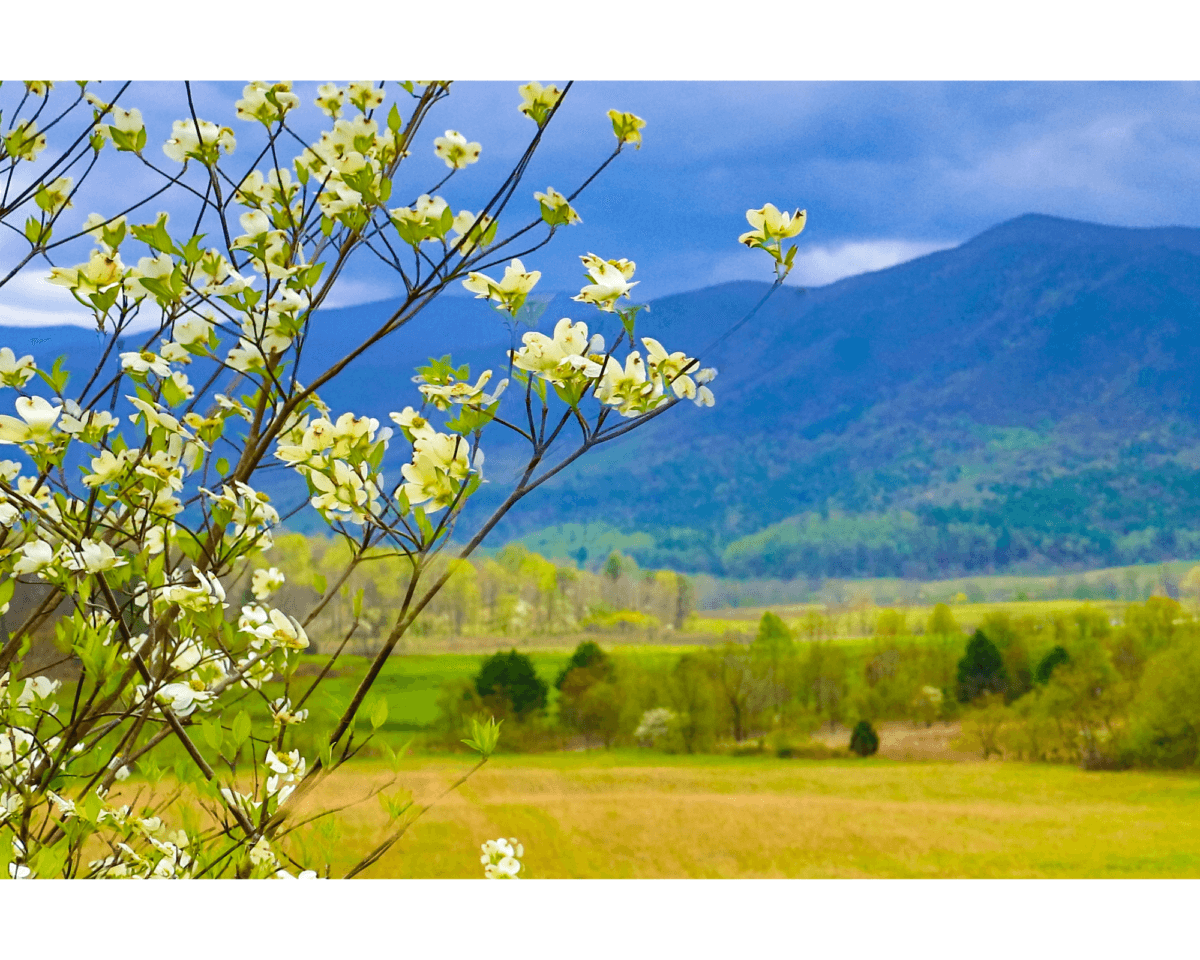
If you want to skip the tourist strip, this is your base. Wears Valley offers quiet, rural access to the western half of the park. You’re trading convenience for space—expect a 15-20 minute drive for groceries and a quiet morning on a cabin porch instead of a 5-minute walk to breakfast.
Logistics
- The Backdoor Entrance: Staying here gives you access to the Metcalf Bottoms entrance via Lyon Springs Road. This bypasses the Gatlinburg traffic entirely and saves 30+ minutes when heading to Cades Cove. The road is narrow and winding—avoid it if you’re towing a trailer.
- Groceries & Supplies: No major chain grocery stores. Mountain Brothers General Store is good for snacks and coffee, but for a full restock, you’ll need to drive 15–20 minutes to Pigeon Forge.
- Parking & Fees: You must pre-purchase and print your parking tag before arriving. While there is an automated kiosk at the Metcalf Bottoms picnic area, cell service is non-existent, and the machines occasionally go out of order. Printing at home is the only way to guarantee you aren’t stuck driving 20 minutes to find a signal. If you forget to print your tag, the closest place to buy one is the Townsend Visitor Center—about 15 minutes away.
- Evening Activities: Quiet cabin time. No walkable town or services nearby.
Drive Times from Wears Valley
- Metcalf Bottoms (River/Picnic): 5–10 min
- Elkmont / Little River Trail: 15–20 min
- Tremont / Middle Prong Trail: 20–25 min
- Cades Cove: 40–45 min (saves 30+ min vs Gatlinburg)
- Pigeon Forge Parkway: 15–20 min
Where to Stay
Valley Floor Cabins
Easier access with flatter driveways. Best for families with larger vehicles or who want simpler ins and outs.
Best for: If you have a grandparent with limited mobility or are driving a large vehicle (like a rented 12-passenger van) and want to avoid steep hills and 20+ steps to the front door. Stick strictly to Valley Floor Cabins near Lyon Springs Road. You get level entries and flat driveways, making it much safer for unloading gear than the steep Ridge inclines.
Ridge Cabins
Better views but steep, winding driveways that can be challenging in bad weather or with larger vehicles.
How to Choose Where to Stay in the Smoky Mountains with Kids
For most families, where to stay in the Smoky Mountains with kids depends on whether they prioritize park access, entertainment, or quiet cabin space.
Choose Gatlinburg for maximum park time and walkable evenings.
Choose Pigeon Forge for the best groceries, resorts, and high-energy attractions.
Choose Wears Valley for a quiet cabin experience and the fastest access to Cades Cove.
The Smoky Mountains work for a lot of different families—whether you’re looking for trails, entertainment, or just quiet time on a cabin porch. Pick the base that fits your priorities, plan for traffic if you’re staying farther out, and give yourself permission to keep things simple. The park will still be there tomorrow.