Things to Do in the Smoky Mountains with Kids (Family-Friendly Rivers, Trails & Scenic Drives)
If you’re looking for things to do in the Smoky Mountains with kids, this guide covers the best rivers, easy hiking trails, scenic drives, and family-friendly stops near Gatlinburg and Pigeon Forge.
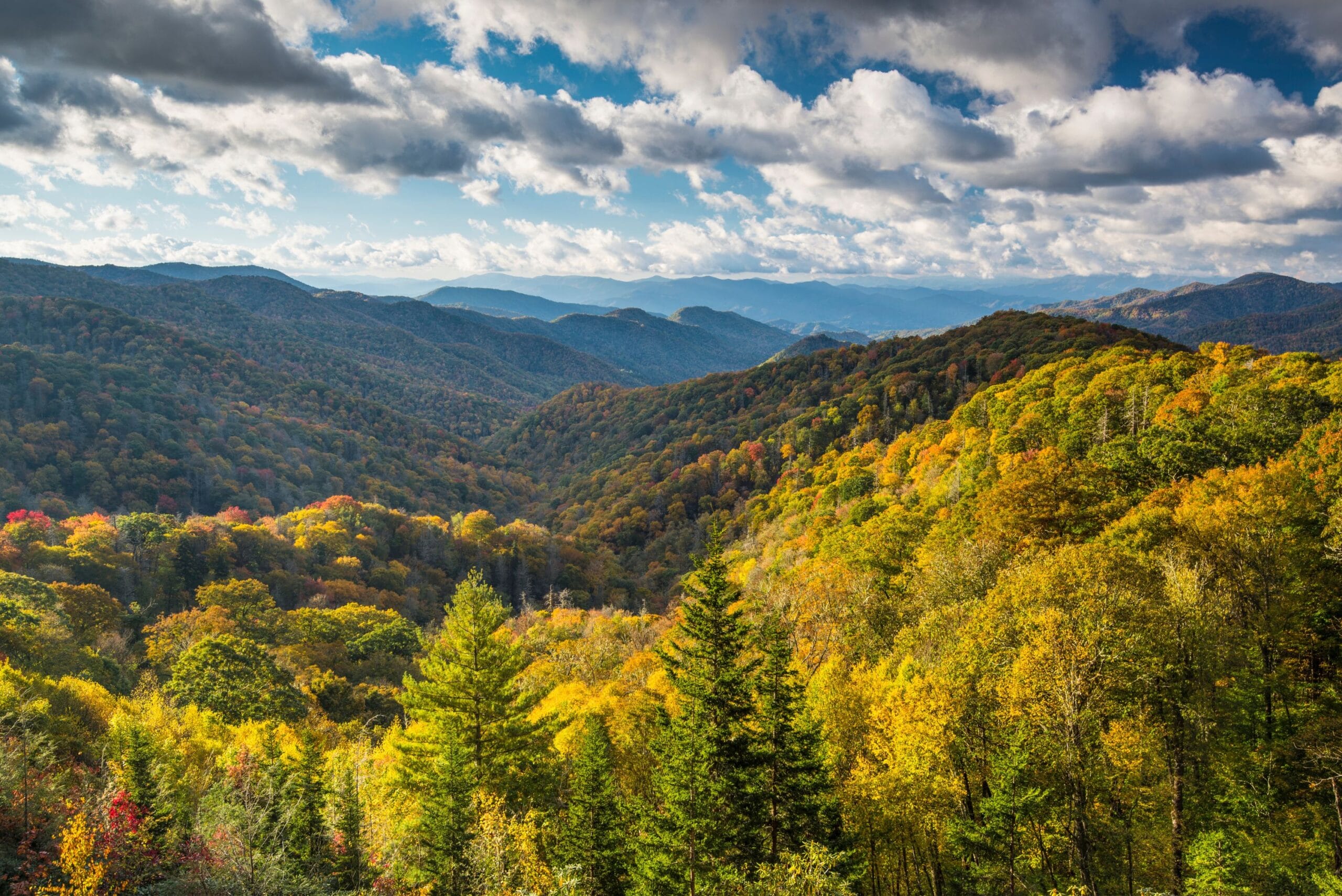
There’s a certain kind of family trip that only the Smoky Mountains can offer. Morning light spills through misty ridges. Rivers tumble over pebbles as kids discover driftwood along the banks. Days stretch lazily beneath towering trees and across layered blue mountains, and evenings feel slower, even after a full day outside.
The Tennessee side of the park offers a mix of rivers, trails, and scenic drives where families can connect with nature. Most of these spots are roughly 20–45 minutes from Gatlinburg, making it easy to plan a day trip or mix-and-match rivers, trails, and drives.
Where you stay will shape your daily logistics, from driving time to how easily you can access the park. See our guide on where to stay in the Smokies to find the best proximity to these spots.
This post contains affiliate links; I may earn a commission at no extra cost to you. Full Disclosure
Smokies Survival Kit (What You Need For the Smoky Mountains with Kids)
- Parking Pass Required: Since 2023, you need a parking tag to park anywhere in the park for more than 15 minutes. Buy it online before you go (nps.gov/grsm) or at Sugarlands Visitor Center. Rangers ticket cars without tags—it’s not optional.
- The Printer Dilemma: If you buy online, you must print a physical copy before you leave. Digital versions on your phone are not accepted, and park staff cannot print them for you.
- The Printer-Free Solution: If you don’t have a printer at your rental, buy a physical tag in person at these spots:
- Automated Kiosks (24/7): Credit-card machines at major trailheads and lots including Townsend Wye, Metcalf Bottoms, Sugarlands, Newfound Gap, Cades Cove entrance, and Deep Creek.
- Visitor Centers: Purchase at the counter at Sugarlands, Townsend, Cades Cove, Oconaluftee, or the Gatlinburg Welcome Center.
- Local Retailers: Grab one at the REI in Pigeon Forge or Greenbrier Grocery before entering.
- Logistics: Print your pass before you leave. There are no public printers in the park.
- The Backdoor Shortcut: If your destination is Cades Cove, Metcalf Bottoms, or the Townsend Wye, do not drive through Gatlinburg. You will get stuck in “The Spur” traffic. Instead, use the Townsend entrance—the single best way to save 45+ minutes of sitting in the car with kids. See the Cades Cove and river sections below for specific routes.
- The 10-to-2 Traffic Trap: Avoid “The Spur” (the road connecting Pigeon Forge and Gatlinburg) between 10:00 AM and 2:00 PM. This is peak congestion. Aim to be inside the park gates before 9:00 AM to save your sanity.
- No Cell Service: About 90% of the park is a dead zone. Download the offline version of Great Smoky Mountains National Park on Google Maps before you leave your rental. Screenshot trail maps if you’re relying on your phone. Since many mountain rentals also struggle with connectivity, see our tips for choosing the best family cabin to ensure your home base has the reliable setup you need.
- Cabin Driveway Reality Check: Many mountain driveways are incredibly steep or gravel-heavy. If you’re driving a minivan or low-clearance vehicle, email your host to ask if a front-wheel-drive van can handle the incline. Some “family-friendly” cabins practically require AWD.
- The Wet Gear Reality: Rivers mean wet kids and wet car seats. Pack: towels, change of clothes for everyone, plastic bags for soggy gear, and water shoes with good grip (the rocks are famously slick).
- Temperature Swings: It can be 10–15°F cooler at higher elevations (like Clingmans Dome) than in Gatlinburg. Always bring layers, even on warm days.
Best Rivers in the Smoky Mountains for Kids
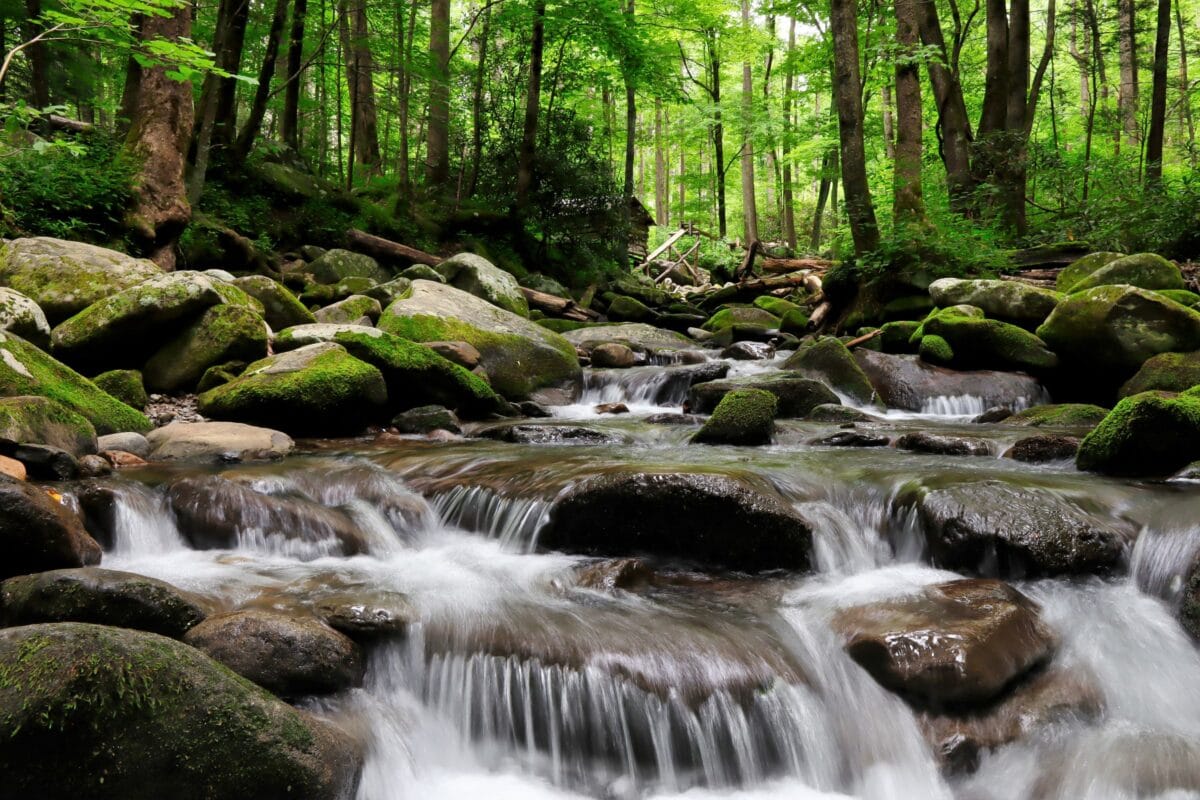
Rivers are where the Smokies become real for kids. Not just scenery to admire from the car, but places to step into, splash around, and explore on their own terms. These aren’t swimming holes or developed beaches—they’re natural stretches where water tumbles over rocks, pools gather in shaded bends, and kids can hop from boulder to boulder without anyone rushing them along.
The three spots below are the ones that stay with you. If you’re craving something quieter, slower, and a little more meaningful—these rivers invite families to pause, watch the currents, and notice the light shifting across pebbles and boulders.
The reality of river rocks: The rocks in Smokies rivers are famously slick—covered in algae that makes them extremely slippery when wet. Water shoes with good grip (like Keens or Crocs) are essential. Also plan for wet clothes and the “wet car” logistics—bring towels, a change of clothes, and plastic bags for soggy gear.
Greenbrier
A quieter stretch of the park where the road follows the river through dappled shade. Clear pools form along the bends, and pebbly shores make it easy for kids to wade in and explore. Some sections move faster over rocks, creating small cascades that kids naturally gravitate toward. This is known as one of the cleanest rivers in the entire park.
- The Draw: This is where you’ll find families who’ve been coming to the Smokies for years. The road parallels the river for miles, so you can drive slowly and find your own quiet corner rather than one “perfect” crowded spot.
- Best for: Kids 3+ who can navigate uneven rocks with help. Younger toddlers will need close supervision. Good for tubing.
- Access: From Gatlinburg, take US-321 toward Cosby. Turn right onto Greenbrier Road (about 15 minutes). Logistics: The road turns to gravel about 3 miles in; it is fine for minivans but will be dusty. The road follows the river for several miles. Most families use the second parking lot on the right, about 0.5 miles from the main road.
- Parking: Pull-offs along the road are informal gravel areas. The main swimming area is across from the second parking lot. Arrive before 11 AM on weekends in summer for easier parking. Do not park on grass—rangers ticket. If pull-offs are full, you’ll need to wait or try another spot.
- Facilities: Picnic area has restrooms with cold running water, picnic tables, and charcoal grills. No facilities along the road itself.
- Rules: Check NPS road closures before heading out—Greenbrier Road occasionally closes for maintenance.
- Wild Nest Tip: The second parking lot (about half a mile in) is where most families park for swimming. The swimming area is right across the street from the lot.
Metcalf Bottoms
Large rounded boulders line the river here, creating natural stepping stones and shallow pools where kids can move from rock to rock. Light filters through the trees in shifting patterns, and the sound of flowing water fills the air. It’s immersive and playful in a way that keeps kids engaged for hours.
- The Draw: The boulders. They’re big, smooth, and spaced just right for kids to hop across. While the picnic area brings more families, you can walk upstream or downstream a few minutes to find quieter pockets where the river bends.
- Best for: Kids 4+ who can balance on uneven surfaces. Great for families with multiple kids who want space to spread out. Rocks near water can be slippery—watch footing carefully.
- Access: From Gatlinburg, take Little River Road toward Cades Cove. Metcalf Bottoms is about 12 miles (20–25 minutes). Watch for the picnic area sign on your left.
- Parking: Dedicated lot at the picnic area holds about 30 cars. Fills by midday on summer weekends. Arrive before 10 AM or after 3 PM. Do not park on grass—rangers ticket.
- Facilities: Vault toilets at the picnic area—one of the few river spots with bathrooms nearby. Large pavilion that holds up to 70 people. Picnic tables, charcoal grills, and drinking water fountains available.
- Wild Nest Tip: Combine river play with the 1.5-mile round-trip trail to Little Greenbrier Schoolhouse. It’s a historic log cabin from 1882 with old desks and a blackboard—kids love exploring it.
Townsend (Little River)
Slower, wider stretches with a gentler current. Gravel and pebbly shores mix with occasional sandy patches, making it one of the easiest spots to step in safely with children. The river spreads out here, creating shallow sections where even cautious kids can wade in without worry. The most popular swimming area is known locally as “Townsend Wye” or “The Y”—where the Little River meets the Middle Prong.
- The Draw: This is the calmest of the three. If your kids are younger, less confident in water, or you just want a spot where you can relax while they play, Townsend delivers. The wide beachy area and grassy field make it ideal for picnicking and low-stress tubing.
- Best for: Toddlers and early elementary ages. Families who want a quieter, gentler river experience. Features a jump rock and areas suitable for tubing.
- Access: From Gatlinburg, take Little River Road west toward Townsend (about 30–35 minutes). The Y is right at the Townsend entrance to the park where Little River Road meets River Road. Additional pull-offs along Laurel Creek Road and Little River Road.
- Parking: Informal gravel pull-offs. More space than Greenbrier, less crowded overall. The Y has the largest parking area. Most spots fit 3–6 cars. Logistics: If the main “Y” lot is full, there is overflow parking about 0.2 miles further down Little River Road.
- Facilities: No bathrooms along the river. Use facilities at the Townsend Visitor Center (5 minutes away) or gas stations in town.
- Wild Nest Tip: Head to “The Y” (Townsend Wye) for the best all-around family spot—wide pools, grassy areas for picnicking, and gentle rapids for tubing.
Best Family-Friendly Hiking Trails in the Smoky Mountains
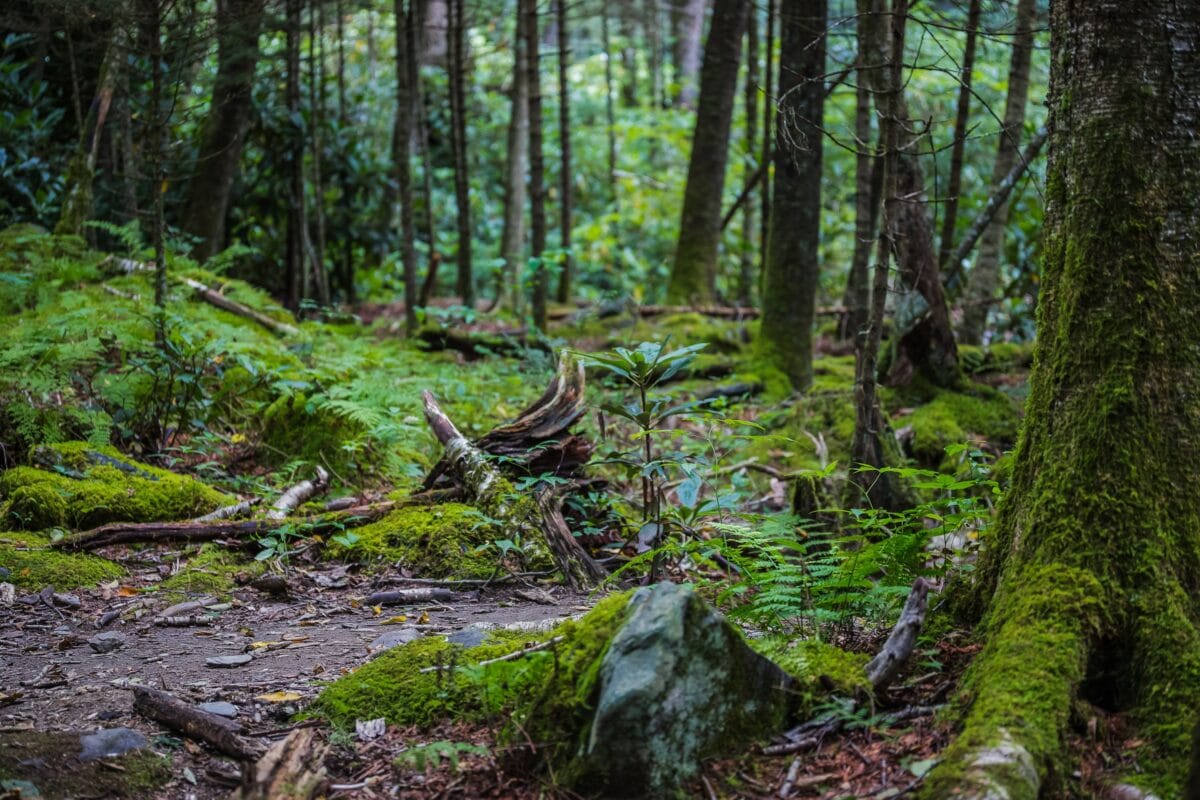
Trails in the Smokies offer a chance to wander through forests, discover waterfalls, and notice the small details of the mountains. Leaves rustle underfoot, streams trickle alongside paths, and light filters through the canopy in ways that make every step feel a little magical. Each trail has its own character and pace, giving families different ways to explore the park on foot.
Little River Trail
A gentle walk along the river with mostly flat terrain. Dirt path with small rocks underfoot, and the river stays visible in sections, adding a soft soundtrack to your walk. Occasional small cascades appear where the river tumbles over rocks. The trail is wide and gravel-packed—doable with a jogging stroller (like a BOB), but bumpy for a travel stroller.
- The Draw: Movement without challenge. No steep climbs, no dramatic payoff—just a peaceful walk through the forest with water nearby. You can turn around whenever the kids are done without feeling like you “missed” the destination.
- Best for: Ages 3+. Great for younger kids or families who want a shorter, easier option.
- Access: Out-and-back. A 2 mile round trip is comfortable for most families, but you can turn around earlier or go farther. Logistics: From Gatlinburg, take Little River Road toward Elkmont. Turn into the Elkmont Campground area and drive past the ranger station to the back parking lot.
- Trailhead: Near the gate at the far end of the campground.
- Time: 1–1.5 hours for a 2-mile round trip at kid pace with stops.
- Parking: Large lot at Elkmont Campground. Fills by late morning in summer.
- Facilities: Vault toilets at the campground. Water fountain when the campground is open (spring through fall).
- Wild Nest Tip: This is a flexible trail—turn around whenever kids are done. No dramatic destination means no pressure.
Grotto Falls
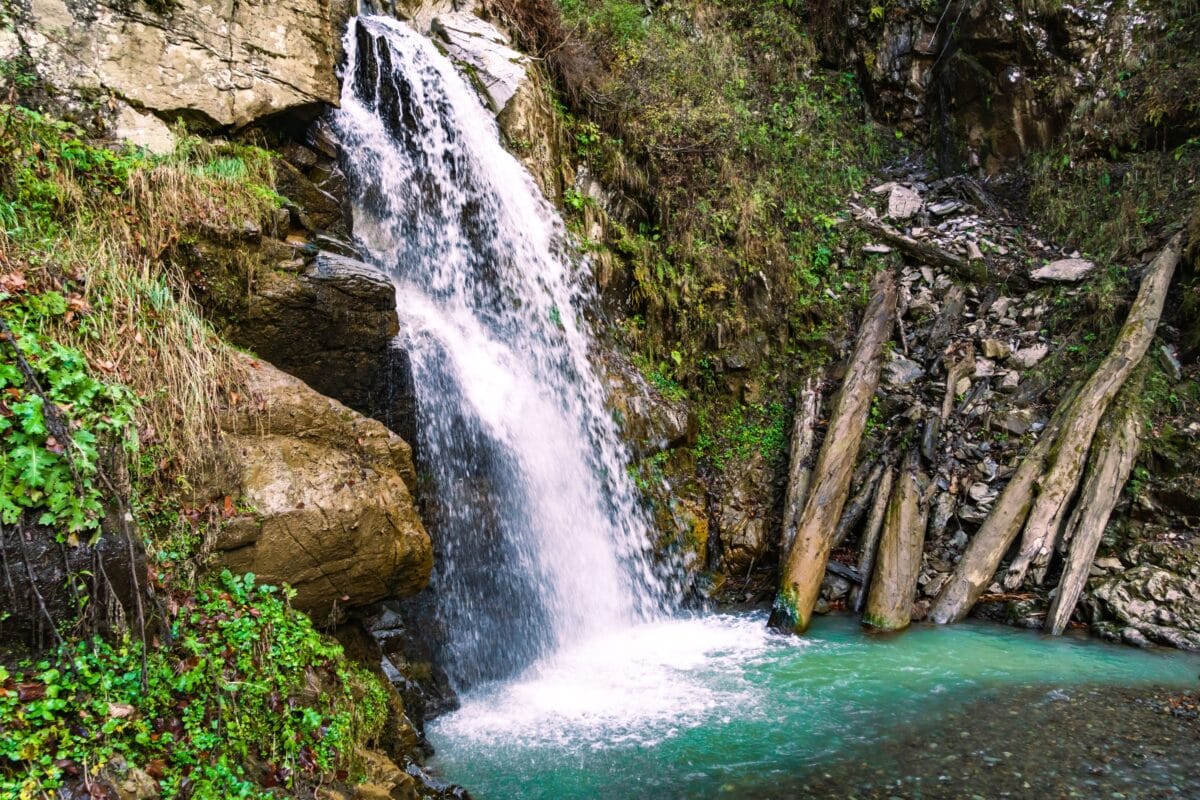
The trail leads to a waterfall you can walk behind—a feature kids find thrilling. Short paved sections near the start give way to natural dirt paths with roots and rocks. It’s a steady 1.3-mile climb up to the falls with a moderate incline. The waterfall at the end makes the effort worthwhile, but toddlers will likely need a carrier for the return trip.
- The Draw: You can walk behind the waterfall. It’s a singular experience that sticks with kids long after the hike is over. The destination is the absolute highlight here.
- Best for: Ages 5+. Younger kids can do it if they’re used to hiking, but the steady uphill return means toddlers usually need a carrier. Prepare for crowds.
- Access: 2.6 miles round trip (1.3 miles each way). Logistics: Located on the Roaring Fork Motor Nature Trail (one-way loop). Access this from Gatlinburg via Airport Road.
- Trailhead: Parking is about 2 miles into the one-way loop (30–35 minutes total from Gatlinburg). Warning: If you miss the parking lot, you cannot turn around; you must drive the remaining 6 miles of the loop to try again.
- Time: 2–2.5 hours round trip with waterfall exploration time.
- Parking: Small lot holds about 20 cars. Extremely popular—arrive before 8:30 AM or you won’t get a spot. No roadside parking allowed on the Motor Nature Trail.
- Facilities: No bathrooms at trailhead. Use facilities in Gatlinburg before heading out.
- Rules: Roaring Fork Motor Nature Trail (access road) closes in winter.
- Wild Nest Tip: The rocks behind the falls are extremely slippery—wear grippy shoes and take your time. You’ll get slightly wet walking behind the waterfall. Bonus: you might spot supply llamas on the trail! They carry supplies to LeConte Lodge and kids love seeing them.
Middle Prong Trail (Tremont)
Dirt trail with small rocks and a gradual incline that follows the river through dense forest. Footing can be uneven in places, so watch younger children closely. Small waterfalls appear tucked among the trees, and the path narrows and opens at intervals, creating a varied, intimate experience.
- The Draw: This trail stays close to the river for most of the route, but it’s quieter and less “polished” than Grotto or Laurel Falls. It’s immersive and loud with the sound of rushing water, without the heavy crowds.
- Best for: Ages 6+. Kids who are comfortable on uneven trails and enjoy exploring along rivers.
- Access: 2–4 miles round trip depending on turnaround point. Logistics: From Townsend, turn onto Tremont Road. Follow it 5 miles to the very end where the pavement turns to gravel. About 45 minutes total from Gatlinburg, or 15 minutes from Townsend via the backdoor entrance.
- Trailhead: At the end of the road (about 45 minutes total from Gatlinburg).
- Time: 1.5–3 hours depending on distance.
- Parking: Small gravel lot at the end of the road. Less crowded than Grotto Falls, but can fill on weekends.
- Facilities: Porta-potty at the Institute parking area (seasonal). Check before you rely on it.
- Wild Nest Tip: This is one of the quieter trails. You’ll hear water constantly, but won’t fight crowds like you will at Grotto Falls.
Porter’s Creek
Trail to historic ruins and small waterfalls, with a mix of dirt and rock surfaces. Mostly flat with gentle grades. Ferns and moss grow thick along the path, and remnants of old homesteads—stone walls, chimneys, foundations—appear along the way, giving kids tangible pieces of history to discover.
- The Draw: The ruins. They’re scattered throughout the first mile, and kids love finding them. It’s a natural scavenger hunt layered with stories about the families who lived here before the park existed.
- Best for: Ages 4+. Great for kids who respond to stories and tangible discoveries.
- Access: 2 miles round trip to Fern Branch Falls. Logistics: From Gatlinburg, take US-321 toward Cosby, turn into the Greenbrier entrance, and follow the signs for Porter’s Creek.
- Trailhead: At the end of Porter’s Creek Road (about 40 minutes total).
- Time: 1.5–2.5 hours depending on how much time you spend exploring ruins.
- Parking: Small lot at the end of Porter’s Creek Road holds about 10 cars. Logistics: If the lot is full, there is a small gravel overflow area about 0.1 miles back down the road.
- Facilities: No bathrooms at trailhead. Use facilities in Gatlinburg or along US-321.
- Wild Nest Tip: The historic ruins are scattered throughout the first mile. Kids love finding them—it turns the hike into a scavenger hunt.
Laurel Falls
CURRENTLY CLOSED: Trail closed January 6, 2025 through summer 2026 for major rehabilitation.
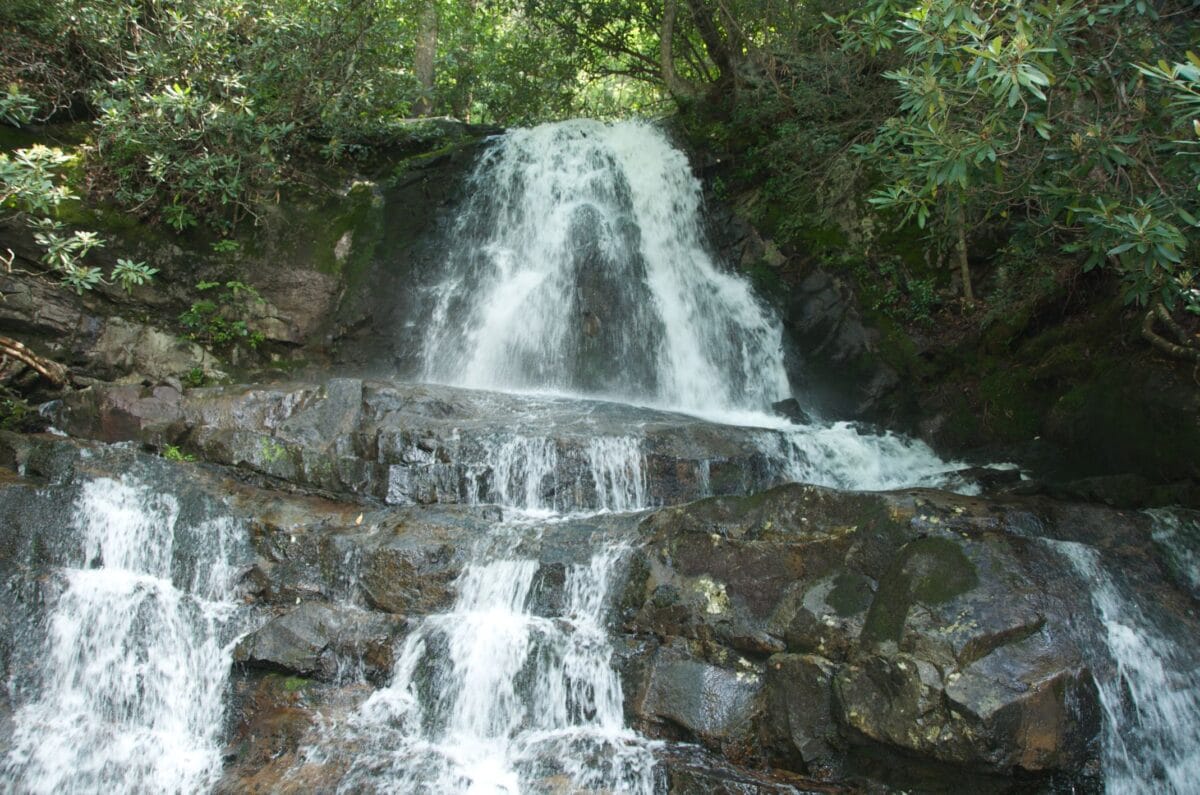
The hike to Laurel Falls is the most popular waterfall hike in Great Smoky Mountains National Park, featuring a paved trail that leads to an 80-foot, two-tiered waterfall.
- The Draw: It is the longest paved trail in the park, making it the most accessible waterfall hike for families with strollers or younger kids who need easier footing.
- Best for: Ages 3+ (once reopened).
- Access: 2.6 miles round trip (1.3 miles each way). Fully paved trail with moderate incline.
- Trailhead: From Gatlinburg, drive 3.5 miles west on Little River Road toward Cades Cove.
- Parking: Parking areas on both sides of the road (when open). Logistics: When it reopens, there will be 50 additional parking spaces, but it will still fill by 8:30 AM.
- Time: 1.5–2 hours round trip with time at the waterfall.
- Facilities: Vault toilets planned as part of rehabilitation.
- Status: Expected to reopen summer 2026.
- Wild Nest Tip: When the trail reopens in 2026, the new viewing platforms will make it much safer for kids around the falls. Expect it to remain the most crowded trail in the park; arrive by 8 AM.
Best Scenic Drives in the Smoky Mountains for Families
Some of the Smokies’ most iconic views are best experienced from the car. Wide ridges, layered blue mountains, and valleys stretching to the horizon give a sense of the park’s scale that you can’t always get on foot. These drives let families pause for a quick look, stretch their legs, or snap a few photos without committing to a long hike.
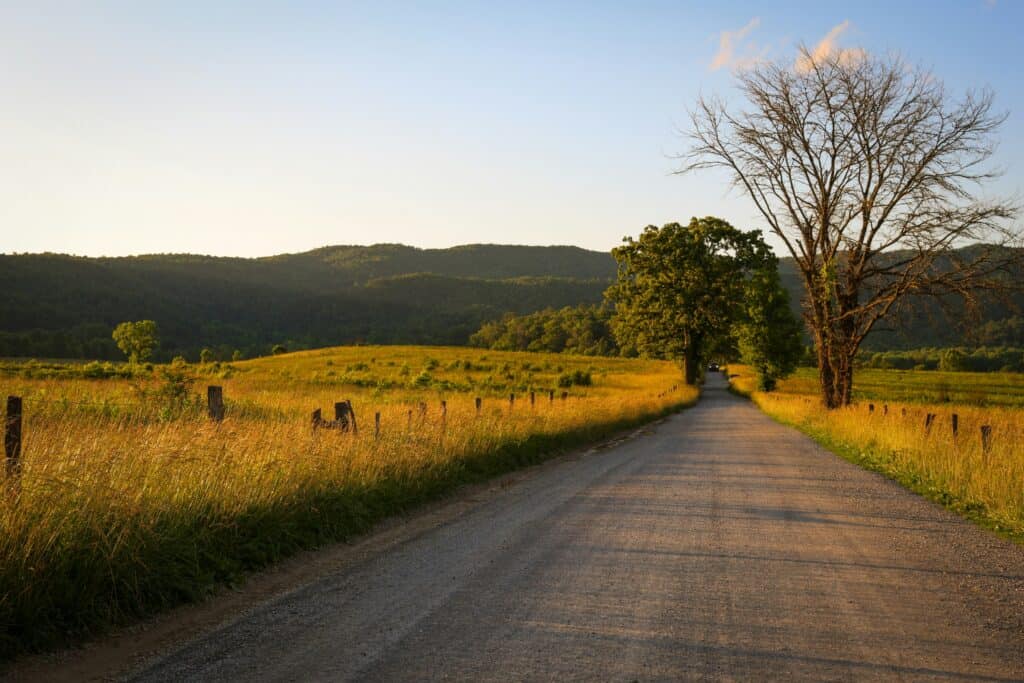
Foothills Parkway
A scenic drive with wide mountain vistas and overlooks where you can step out for brief panoramic views. Ridges layer into the distance, and pull-offs reward even short stops with views you can’t see from any trail.
- The Draw: This is the “rest day” drive. It allows you to see the massive scale of the Smokies with almost zero physical effort, making it ideal for napping kids or weary parents.
- Best for: All ages. Good as an end-of-day visual reward or when you want something low-effort but memorable.
- Access: From Gatlinburg, take US-321 south toward Townsend, then follow signs to Foothills Parkway. About 30–40 minutes to reach the start of the scenic section.
- Length: Roughly 16–20 miles.
- Stops: Pull-offs allow quick 10–15 minute stops for photos or to stretch legs. No trails, no rivers—just views.
- Parking: Every overlook has ample paved parking. This is the least stressful place in the park to find a spot.
- Facilities: No bathrooms along the parkway. Use facilities in Townsend before starting.
- Wild Nest Tip: Light and mist change throughout the day. Early morning and late afternoon offer the most dramatic lighting.
Roaring Fork Motor Nature Trail
A narrow, winding one-way loop that threads through old-growth forest, past rushing streams and historic log cabins. It’s tight, slow, and completely immersive—the kind of drive where you feel the forest closing in around you. Bears are common here, and waterfalls appear without warning along the roadside.
- The Draw: Bite-sized adventure. You get waterfalls, history, and a high chance of seeing black bears, all within a 15-minute drive from downtown Gatlinburg. If Cades Cove feels too far, this is your backyard alternative.
- Best for: Families who want to see the “wild” side of the Smokies without a 5-mile hike. Kids who get restless in the car will appreciate the frequent short stops.
- Access: From Gatlinburg, follow Airport Road (Historic Nature Trail) from Traffic Light #8. The loop begins just past the Rainbow Falls trailhead (about 15 minutes total).
- Length: 5.5 miles one-way. Takes 45 minutes to 1.5 hours depending on stops and bear jams.
- Logistics: No RVs, trailers, or buses allowed—the turns are too tight. This is a one-way loop; once you start, you’re committed to finishing.
- Parking: Small pull-offs at each stop hold 3–8 cars. If a spot is full, continue to the next one—you’ll loop through quickly.
- Facilities: No bathrooms on the loop. Use facilities in Gatlinburg before starting.
- Status: Historically closes in winter and reopens early May. Check the NPS “Current Conditions” page if visiting in late March or April.
Kid-Approved Stops:
- Noah “Bud” Ogle Farmstead: Just before the loop officially starts. A frontier farm kids can walk through, featuring a rare twin-pen cabin and a wooden flume.
- Place of a Thousand Drips: Near the end of the loop. A lacy waterfall visible from your car. Spectacular after rain.
- Ogle Grist Mill: A tiny tub mill tucked along the creek. Small, accessible, perfect for a 10-minute leg stretch.
- Grotto Falls Trailhead: The parking lot for Grotto Falls is about 2 miles into the loop. Walking behind the falls is the big winner for kids—that “behind the curtain” experience sticks with them long after the hike is over.
Wild Nest Tip: If you see a line of cars stopped, it’s likely a “bear jam.” Keep your windows up, stay in the car, and have the camera ready. This is one of the most active bear corridors in the park. With Laurel Falls closed through summer 2026, Roaring Fork will be busier than usual—arrive by 8:15 AM to avoid bumper-to-bumper traffic.
Cades Cove
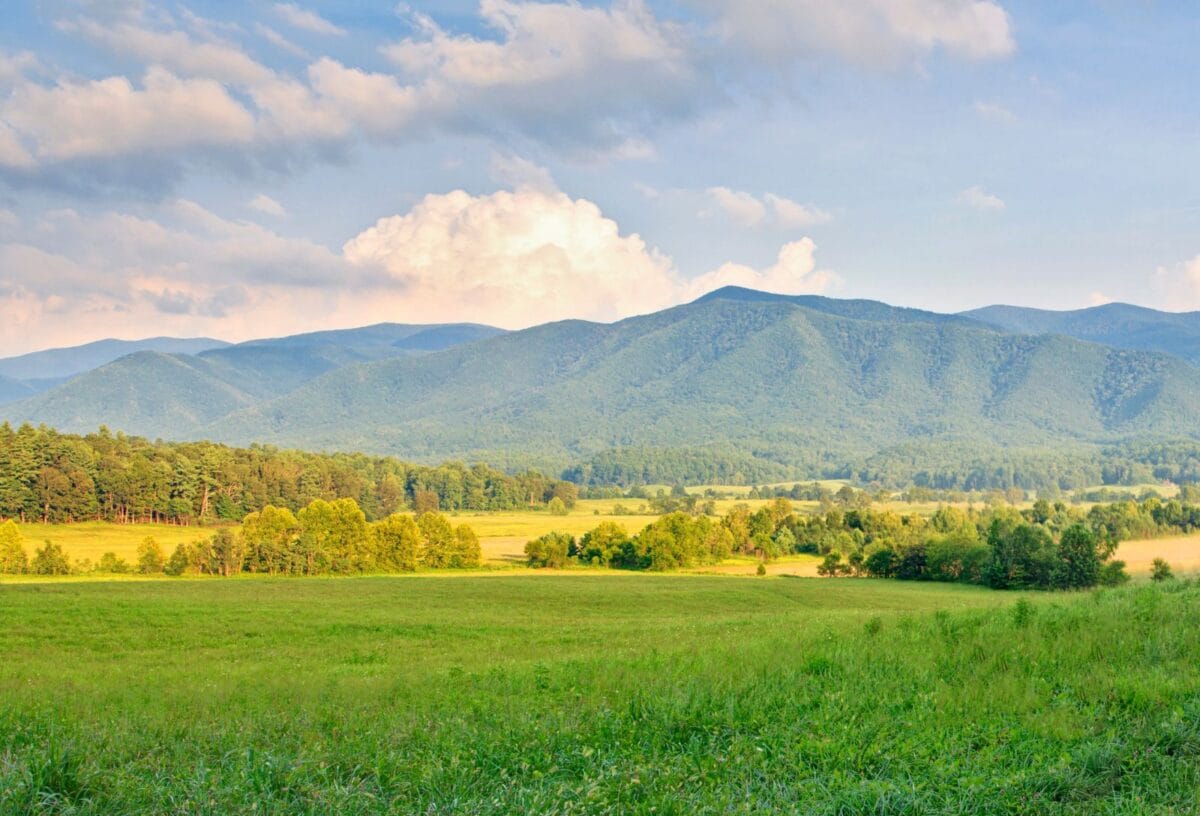
An 11-mile one-way loop through a broad valley where historic homesteads sit against a backdrop of surrounding ridges. This is the most popular drive in the park, which means it’s also the slowest. Traffic crawls at 5–10 mph on good days, and stops completely during bear jams. The valley offers wide-open views, log cabins kids can walk through, and the highest probability of seeing black bears, deer, and turkeys in the entire park.
- The Draw: It’s a driving wildlife safari with tangible history. Kids can run through actual frontier cabins, watch a working grist mill, and spot animals grazing in open fields. If you have the time and patience, it delivers.
- The Reality Check: This is a 2–4 hour commitment minimum, and that’s if traffic cooperates. If a bear appears, traffic stops entirely. Kids who struggle in cars will find this exhausting. Cades Cove rewards patience, but it punishes impatience.
- Best for: Families with older kids (6+) who can handle long stretches in the car, or families staying multiple days who want a dedicated “Cades Cove day.” Not ideal for toddlers or restless car riders.
How to Get There: Use the Backdoor
- Most GPS apps will default to sending you through Gatlinburg. Ignore it. If you’re coming from Pigeon Forge, Sevierville, Knoxville, or Maryville, take Wears Valley Road (US-321 S) into Townsend.
- The Route: Turn at Traffic Light #3 in Pigeon Forge. Follow the winding (but scenic) road for 15 miles until you hit the main intersection in Townsend, then turn left into the park.
- Why it matters: You’ll arrive at the Townsend Wye (a great swimming hole) and be only 11 miles from the start of the Cades Cove loop, completely bypassing the hour-long crawl through downtown Gatlinburg.
- If you’re staying in Gatlinburg: The backdoor is longer in miles (35 vs 25) but uses straighter, flatter highways instead of winding park roads. If your kids get car sick, this route is easier on little stomachs..
- Length: 11 miles one-way. No turning around once you start.
- Time: 2–4 hours depending on traffic, bear jams, and how many stops you make.
- Parking: Pull-offs at each historic site hold 5–15 cars. Mid-loop at Cable Mill area has a larger lot with overflow parking.
- Facilities: Restrooms only at Cable Mill area (halfway point). No other bathrooms on the loop. Cades Cove Campground Store near the entrance has basic snacks and ice cream, but no real food. Pack a picnic and bring water.
- Vehicle-Free Wednesdays: From May through September, the loop is closed to cars every Wednesday until 10 AM. You can bike the loop instead—rent bikes at the Cades Cove Campground Store near the entrance. This is the only way to experience Cades Cove without traffic, but you need to plan for it.
Key Stops:
- John Oliver Cabin: One of the first stops. Short, easy walk to a sturdy log cabin kids can explore.
- Cable Mill Area (Halfway Point): Working grist mill with massive gears kids love watching. This is also where the restrooms and visitor center are located.
- Abrams Falls Trailhead: A 5-mile round-trip hike to a wide, powerful waterfall. Only attempt this if your kids are experienced hikers and you have an extra 3+ hours. This is not a quick add-on.
Wild Nest Tip: If the loop feels too long or kids are done, look for Hyatt Lane or Sparks Lane—two-way gravel cut-through roads that let you exit early and head back to the entrance without finishing the full 11 miles. Also, fill your gas tank before entering. Idling in bear jams burns more fuel than you’d expect, and there are no gas stations in the park.
Kuwohi (Clingmans Dome)
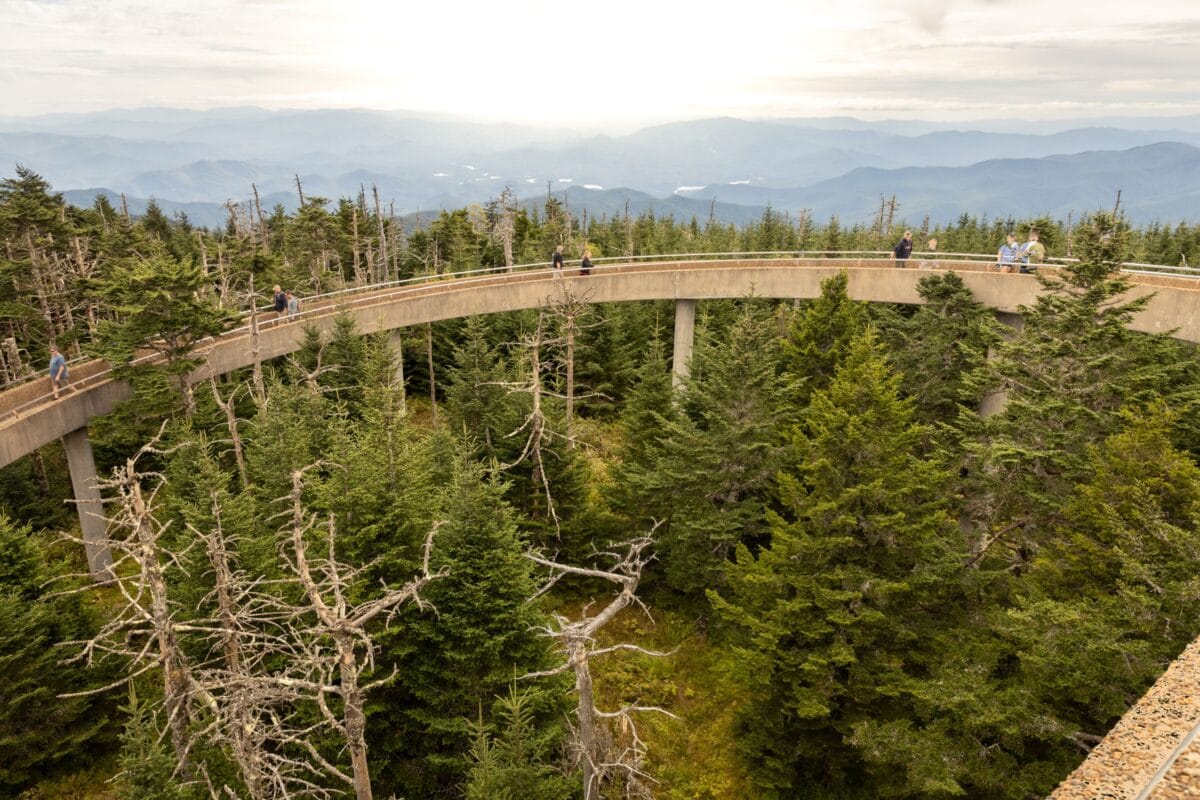
The highest point in the park, with a short paved but steep walk to a 360° panoramic view. Clouds often drift through the valleys, and wind can be brisk at the top, adding to the dramatic panorama. The ridges extend in layers in every direction.
- The Draw: The “Top of the World” observation tower. It offers the most dramatic, high-altitude 360-degree view of the ridges extending in every direction.
- Temperature reality: It’s often 10–15°F cooler here than in Gatlinburg. If your kids are in shorts at the hotel, they’ll be freezing at the tower. Bring hoodies and layers even on warm days.
- Best for: Ages 3+. Worth it for the view, but prepare for the steep climb, potential crowds, and cold temperatures. Closed in winter (typically December–March).
- Access: From Gatlinburg, take Newfound Gap Road south to the Clingmans Dome turnoff, then follow the 7-mile access road to the parking area. About 1 hour 15 minutes total.
- Time: Add 30–45 minutes total for the walk and time at the top.
- Walk: Short, steep paved path (~0.5 miles, 15–20 minutes). This is a “lungs-burning” half-mile climb. Strollers can handle it, but it’s a workout. Not recommended for kids in a “carry me” phase unless you have a carrier.
- Parking: Large paved lot, but one of the busiest in the park. Logistics: Turnover is fast as people only stay 45 minutes; if it’s full, circle for 5 minutes and a spot will open.
- Facilities: Vault toilets at the parking area. No food or water available.
- Wild Nest Tip: The walk is short but steep. Bring water, layers, and take breaks. The 360° view at the top is worth the effort.
You’ve got your pick—rivers, trails, or drives. Now head out, and let the Smokies work their magic.